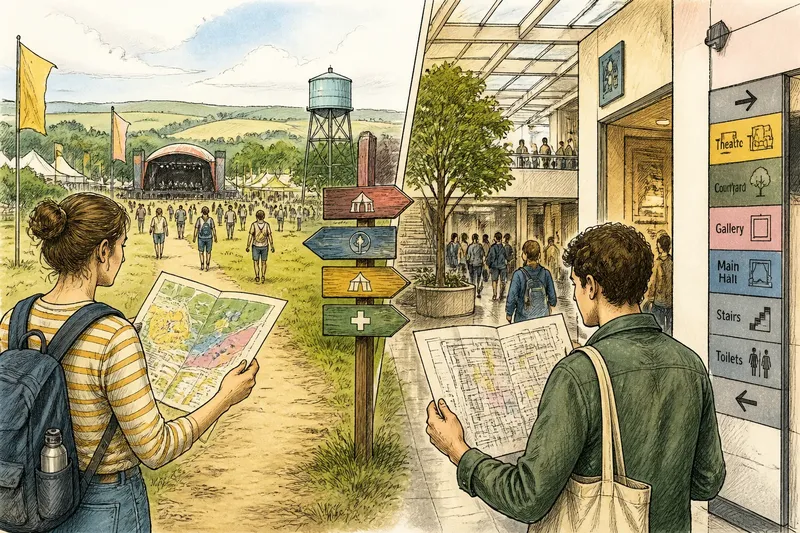
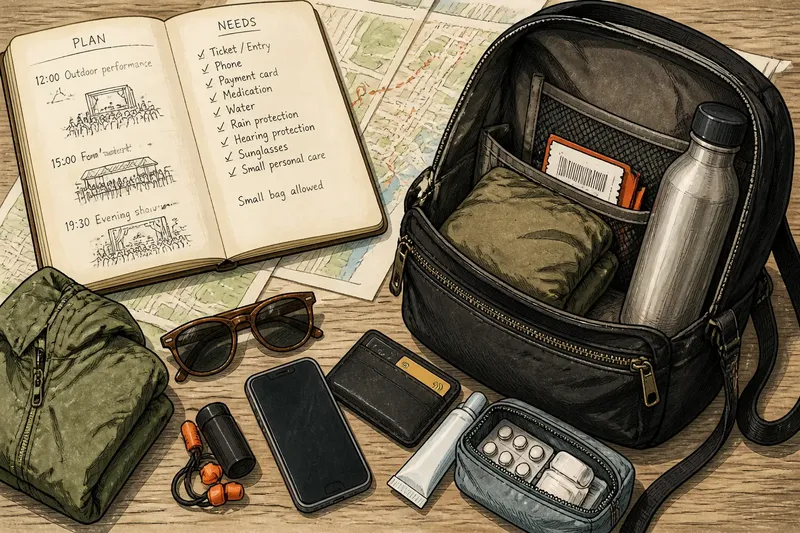
Why a Festival Day Needs Breathing Room
Festival day breathing room helps you keep favorite events while making time for travel, food, delays, and the small discoveries between stages.
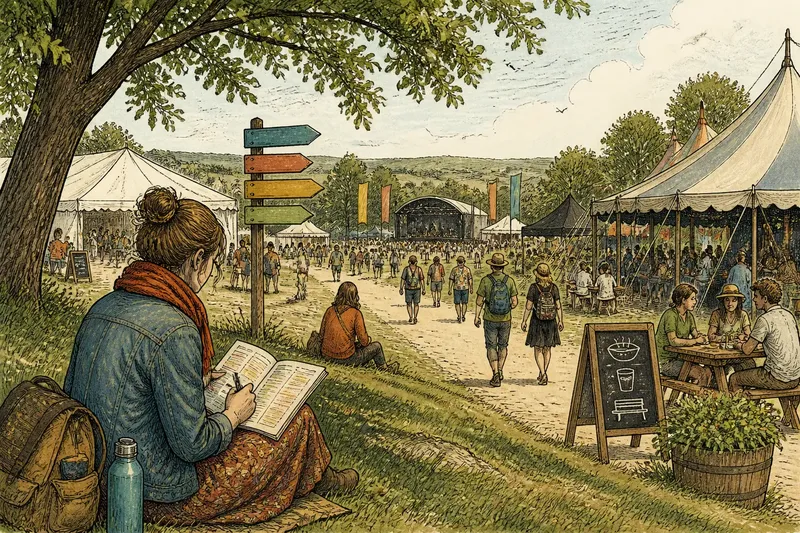
The most common festival-planning mistake is filling every open slot with another event. A packed schedule can cost you the very performances you came to see: one late start or long walk pushes the next plan out of reach. Festival day breathing room means leaving deliberate gaps around the events that matter, so the programme remains usable when the day unfolds unevenly.
What does breathing room actually do?
A festival programme is a sequence of possibilities, not a promise that every transition will happen instantly. Between a reading in a tent and a music set across the grounds, you may need to find the route, move with a crowd, stop for water, or wait while a previous event clears. Those ordinary transitions take time even when nothing goes wrong.
A gap is therefore not empty time. It is the part of the schedule that lets one event end before the next one needs your attention. It can also hold unplanned pleasures: a conversation with a performer after a panel, a street band you hear on the way, or a quieter place to sit before an evening show.
Without gaps, every small delay becomes a choice between abandoning an event and arriving stressed at another. With them, a day has a pulse: focused stretches of activity, followed by room to move, eat, rest, or decide what comes next.
Which events deserve a fixed place?
Start by separating the programme into commitments and possibilities. A commitment is an event you would be genuinely disappointed to miss: perhaps a one-time performance, a discussion tied to your interests, or a meeting with someone attending only that day. Possibilities are appealing options that can be swapped, shortened, or skipped without making the day feel like a failure.
Mark the commitments first, including their start times and locations. Then look at the spaces between them. If two fixed events leave too little time to cross the site or settle into the next venue, one may need to become a possibility. This is a more useful decision than trying to preserve every attractive listing on paper.
Think about the experience each event asks of you, too. A loud, crowded performance may take more out of you than a short talk in a seated room. A long workshop may leave you hungry or ready for quiet. The programme gives you times; your own attention and energy determine how much activity can fit comfortably around them.
How can you leave space without losing favorites?
Build around anchors rather than filling the timetable from beginning to end. Choose a small set of events that give the day its shape, and protect reasonable transitions before and after them. Keep optional events in a separate note or marked as alternatives, so an open period does not feel like a scheduling failure.
- Group by place. If two appealing events are in the same hall or nearby courtyard, they may fit more naturally than events on opposite sides of the grounds.
- Keep one flexible period. Leave a stretch open for food, rest, a delayed start, or an unexpected performance.
- Choose a backup, not a second obligation. Note one nearby alternative for a canceled or full event, but do not treat it as another appointment.
- Check the transition. Consider the route, expected crowd movement, and whether the next event requires a queue or a place in the room.
- Decide what can be shortened. For a drop-in event, you may be able to enjoy part of it and still reach a later commitment; for a ticketed performance, leaving midway may not work.
Say you want to attend a lunchtime poetry reading and an afternoon dance performance in different parts of a festival. Instead of adding a craft demonstration into every available minute, you keep the period after lunch open for the walk and a pause. If the reading ends promptly, you can browse the demonstration; if it runs late or the route is crowded, you still have a calm path to the performance. The expected result is not that every plan happens, but that the two events you value most remain reachable.
What changes the amount of space you need?
Distance is only one part of a transition. A venue may have an entrance queue, limited seating, or a crowd that moves slowly after a popular set. Outdoor conditions can make a sheltered pause more appealing, while a festival spread across streets may require attention to crossings and temporary closures. Read the programme notes and site information, then allow more room where access or entry is uncertain.
Energy matters just as much. Some people enjoy a long run of performances; others need a quiet interval after a crowded room. You do not have to predict your exact mood. Instead, notice which parts of the day are likely to be intense and avoid placing another demanding event immediately afterward.
Eating and drinking are also part of the rhythm, not interruptions to it. If you leave them until the only available gap, that gap may disappear into a line or a search for a suitable option. A loose meal period gives you choices without turning the whole day into a timetable of errands.
What should you ask before filling a gap?
How much time should I leave between festival events?
There is no single interval that works for every site. Use the published locations and access notes to judge the route, then add room for entry, crowds, and a brief pause rather than assuming you can walk straight from one start time to the next.
Should I plan around every event I might enjoy?
No: distinguish events you would regret missing from appealing options you can drop. A short list of anchors keeps your day legible, while a few alternatives give you something to choose if circumstances change.
What if a favorite event overlaps another one?
Check whether either event is repeated, recorded, drop-in, or likely to be available for only one session. If both are truly fixed and overlap, choose the one that matters more to you rather than attempting a rushed arrival at both.
Is an open period wasted festival time?
Not if it gives you room to eat, sit, explore, or recover your attention. An open period can also become a deliberate choice point: you can decide what sounds good then, using the day’s actual pace rather than a guess made at home.
What is not worth the effort?
It is rarely useful to assign every minute a purpose or to calculate a perfect route between every possible event. Festival conditions can shift, and a timetable with no slack becomes brittle. A simple map, a short list of anchors, and a few marked alternatives are usually enough to make sensible decisions as you go.
Also resist treating every gap as something to optimize. You do not need to discover a hidden event or make the most of each pause. Sitting down, listening to the surrounding sounds, or changing your mind can be the most fitting use of time.
How can you adjust the plan during the day?
Keep the schedule easy to revise, whether it is in a phone note or on the printed programme. After each anchor event, check the time, your energy, and the next venue. If the day is running late, let an optional event go before sacrificing the transition to a favorite. If you feel fresh and the route is simple, use an open period for something nearby.
That small reset keeps the plan responsive without requiring constant reorganization. The point of festival day breathing room is not to control the festival; it is to make room for what you chose and for what the day asks of you. A useful programme leaves enough space that a change of pace can remain a choice, rather than a crisis.